What's really going on with retail managers?
The fashion labor market has its own unique characteristics. Industry experience has always been valued, and it continues to be a strength for candidates today. Over the past few years, companies have been actively seeking people from major brands for senior positions. However, in practice, managers with such backgrounds haven't always lived up to expectations. Employers' expectations for job seekers have changed. Career expert Natalia Bolmazova, with experience in recruitment and HR, discusses what's expected of candidates for leadership positions at fashion companies, what requirements are placed on managers, and what's expected of them.
 Natalia Bolmazova -
Founder and CEO of the HR agency "Svoy HR," with experience in recruiting and managing personnel since 2005. Author of the "Key Employee Code" recruitment methodology. Career expert with 10 years of experience consulting on career development issues and a teacher.
When it comes to the talent situation in the fashion industry and fashion retail today, it's safe to say that the demands placed on managers have changed significantly over the past few years. Experts believe the market has already undergone a significant phase, which has brought many changes into place.
Until recently, there was a fairly consistent trend: companies were actively seeking people from major brands for leadership positions. It seemed that someone with such experience would automatically bring systems, processes, and management maturity and quickly "fix" the business. This interest peaked around 2024. Back then, it seemed like a one-size-fits-all solution.
In practice, things turned out to be more complicated. Managers from large organizations often encountered the lack of familiar infrastructure in small or developing brands: no established processes, no adequate team, no additional resources. Where a corporation might have a department, here a single person covers several functions. And at this point, a completely different management perspective was required—not just to develop a strategy, but also to personally implement it, test hypotheses, and assemble the system manually.
Many were unprepared for this. And business owners, in turn, were also disappointed: expectations were one thing, reality was quite different. These interactions rarely lasted long. On average, such stories ended within a few months.

At some point, the market began to sober up. Companies began looking more closely not at a candidate's resume line, but at their specific experience: what problems they solved, under what conditions, what they did themselves, and where they were part of a system. This is a significant shift.
Today, one of the most common requests is for managers who can structure, bring systems together from chaos, build processes, and, at the same time, maintain close ties with the owner. Operational, executive, and commercial roles—people who can not only think but also drive action to concrete results—have become increasingly valuable. I'd especially like to emphasize the importance of working with numbers: managerial maturity today is closely linked to an understanding of economics.
What's happening with the requirements for managers?
It's interesting to observe how employers' demands change. Sometimes they take on rather paradoxical formulations, but when you break them down, the logic becomes clear.
The first thing that's truly important now is relevance and market engagement. Candidates who don't dwell within their past experiences or rely on inertia based on their old knowledge, but rather continue to explore the environment: reading, networking, attending conferences, and observing how the industry is changing, benefit greatly. This way, they gain insight and understanding of the current context.
The second important point is preparation for interaction with the company. Employers increasingly pay attention to candidates who don't just come for an interview, but are expecting and ready for a substantive conversation. This means they've researched the company, its objectives, and its stage of development, and can discuss specific solutions. This format significantly improves the level and effectiveness of the dialogue.
At the same time, the market has begun to consider a broader candidate profile. Today, a person is often expected to cover not only their primary function but also related areas. In a sense, this is an attempt to have "one and a half specialists in one." And here, the winners are those candidates who have a broad mindset, the ability to connect different fields, and work at the intersection.
The value of communication has also grown. But this isn't about a person's "softness" or sociability, but rather the ability to speak clearly, concisely, and to the point, connecting strategy and operational reality.

Another important shift is the new demands: proactivity and self-motivation. Employers are increasingly looking not for someone who waits for a task, but for someone who is ready to make decisions, understand their consequences and take responsibility for them, set goals independently and achieve them, without constant monitoring and motivation from others.
How interviews work today, and where companies are going wrong
There are still many systemic errors in interviewing. One of the most common is a lack of preparation on the part of the employer. Sometimes, a candidate has already completed several stages, spoken with HR, received introductory information, and then arrives for a meeting with the owner or manager. At that point, they're asked the same questions all over again. This creates the impression that there's no coherent process within the company and no flow of information between stages.
The next mistake is making decisions under time pressure—when you only have 30-40 minutes for a meeting, and you need to "get to know the person" in that time. Under these circumstances, subjectivity kicks in: we start relying on associations, recalling our own experiences, and applying old stories to the new candidate. Sometimes, decisions are made literally based on a sense of whether the interviewer is a good fit or not.
A separate problem is the existence of formal criteria and their de facto disregard. A company may determine in advance which competencies are important, but at the time of evaluation, intuitive logic kicks in. This greatly complicates the search.
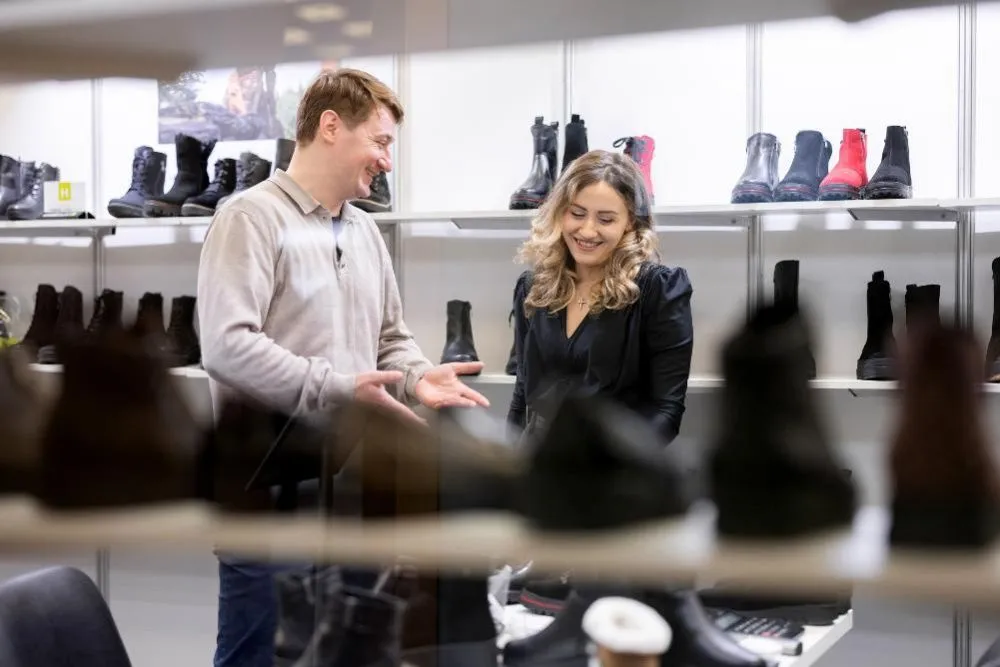
There's another pitfall: working with interview recordings. When managers view a candidate through a recording rather than a live conversation, they miss the opportunity to ask clarifying questions, expand on the candidate's thoughts, and appreciate their depth. As a result, decisions are made based on an incomplete picture.
Interviewing candidates can be improved by using the case interview format, which is currently effective—when the conversation revolves around real business challenges, and the candidate responds not abstractly, but by drawing on their experience or solving a specific situation. This provides a much better understanding of the candidate's capabilities and potential than a classic list of questions.
Is experience in fashion necessary?
The issue of experience in the fashion industry remains one of the most discussed.
On the one hand, experience in fashion does provide an advantage. People adapt more quickly, understand the context more quickly, and start speaking the same language with the team more quickly. Therefore, such candidates are often prioritized.
On the other hand, over the past year and a half, there has been a noticeable interest in candidates from related fields. These could be specialists from the beauty industry, jewelry, or lingerie—areas with similar product and customer-facing logic. Such a transition is possible if there is a comparable level of challenge and understanding of the business.
It's important to understand the boundaries. Abrupt transitions from completely different industries, where there's no contact with the product, customer, or processes of the fashion sector, take time. Sometimes it takes 6-9 months of adaptation, sometimes longer. And here, the question is whether the company is willing to invest this resource.
I'd like to point out that today there are a sufficient number of brands willing to provide new employees with this entry point into the industry. They can't always compete on salaries, but they offer the opportunity to grow quickly, gain experience, try things out, make mistakes, and find effective work solutions. For many candidates, this becomes a conscious choice.

Speed as a key factor
One of the most noticeable shifts in the labor market is the attitude toward speed.
Today, speed, flexibility, and the ability to adapt to change are becoming basic requirements. This applies not only to candidates but also to the companies themselves.
I can give you an example from my current work. Our agency is working on a project with a brand that's going through a transformation: a change in ownership, a restructuring of processes, a reorganization of the team. At one point in the conversation, a very telling phrase comes up: "I don't have three months to figure out if this person is right."
These words quite accurately describe the market situation. Time has become a precious resource. Mistakes are also costly. And delays are just as costly as making the wrong decision.
Therefore, people who can quickly integrate into the context and work of a team, quickly grasp tasks, and deliver results in a short time are now valued. Sometimes this means weeks of adaptation and 30-60 days before the first tangible results.
Balance is key. Expecting speed doesn't mean being superficial. Rather, it's about a combination of depth and tempo, the ability to quickly grasp the situation without compromising the quality of your decisions.
What happens to the market in the end?
Taking all of the above observations together, it becomes clear that the fashion labor market is gradually moving away from its illusions.
Companies no longer expect to find the "perfect person" who will show up and do everything. Candidates, in turn, have a better understanding of the conditions they're entering and what will be required of them.
The value of concrete experience, specific actions, and the ability to work in reality, not just in theory, increases. The focus shifts away from the catchy company names on a resume, and toward what a person can actually do.
And in this sense, the main challenge today is not the search for people per se, but the ability to correctly formulate the task, build a process, and soberly evaluate each other from both sides – the employer and the candidate.
How to avoid over-purchasing goods?
How can a retail shoe store make money with the transition to VAT?
Effective methods that will help improve the effectiveness of sellers
How to open an effective store of shoes and accessories. Success formula
Budget but attractive. How to get a store window right and bright with a limited budget
 Shoes Style and its Discoveries. An Interview with Anton Bazylev, Prize Winner of the International Shoe Design Competition
The international shoe design competition Shoes Style, held in Moscow this year, showcased many interesting footwear and accessory collections. Shoes Report recently published a story about the winners—third-year students from Kosygin Russian State University, Margarita Skvaznikova and Egor Lysov, who presented their "Retrospective" shoe collection at Shoes Style.
 ICEBUG at Euro Shoes: Swedish Innovation in Grip Technology
ICEBUG is a Swedish company steeped in innovation and creativity. Our rapid growth is a result of our expertise in grip and technology. Since its inception, ICEBUG has been creating footwear with superior grip and is always striving to improve grip even further.
 KV+ will present versatile sneakers for both sports and urban wear at Euro Shoes.
The Swiss brand KV+ is not so well known to the general Russian audience, but it is well known in the world of skiing, because it was there that KV+ took its first steps and actively developed. The Swiss brand has earned the trust of the professional sports audience over the past 35 years. At the same time, the Russian sports market of ski equipment has always been a priority for the Swiss.
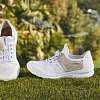 Rieker and Remonte are regular exhibitors at Euro Shoes: meet your favorite brands at the exhibition from August 25 to 28 at the Central Trade Fair Center.
Riker and Remonte will present their Spring/Summer 2027 collections at the Euro Shoes exhibition (August 25–28, WTC Congress Centre).
 New brands at Euro Shoes in August!
At the end of the month, from August 25th to 28th, the international footwear and accessories exhibition Euro Shoes Premiere Collection will take place in Moscow at the WTC Congress Center on Krasnopresnenskaya Embankment. We'd like to introduce you to the new exhibitors at Euro Shoes, who will be presenting their collections of footwear, accessories, shoe care products, and leather goods.
 From July 27 to 29, the Euro Shoes@CAF_Eliteline 2026 exhibition will be held in Almaty, Kazakhstan.
Elite Line is an international specialized exhibition of footwear, fur, leather, and accessories. The exhibition will feature collections from international and domestic manufacturers from Russia, Turkey, Germany, Italy, Kazakhstan, and other countries.
 How to learn to effectively manage store customer traffic?
Customer traffic in shopping malls and street retail is declining; people are shopping less offline for a number of objective reasons, one of which is the convenience of online shopping with all its advantages. And yet, offline shopping continues to thrive. How can we control store traffic, learn to correctly calculate and influence the number of people visiting stores to ensure profitability?
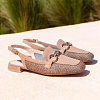 "When Customers Are Few: How Fashion Store Owners Can Squeeze the Most Out of Every Customer"
In recent years, offline retail in clothing, footwear, and accessories has been operating under conditions of a steady decline in incoming traffic. By the end of 2025, offline store traffic in Russia had declined by 8-15%, with the offline segment's purchase rate declining more sharply than the overall market, according to Retail.ru. According to statistics from individual shopping centers, the decline by the end of last year was between 15 and 25%. How can salespeople effectively engage with customers in such challenging conditions? We'll explore service strategies in low traffic conditions with SR expert Elena Vinogradova, who specializes in purchasing and sales in the fashion business. The expert shares proven methods with practical examples of speech modules. Elena is confident that, in a context of declining traffic, high-quality service is becoming the main competitive advantage for the shoe industry.
 How the Masters Forge. Interviews with the Winners of the International Shoe Design Competition, Shoes Style
In May 2026, the finalists of the international footwear design competition, Shoes Style, were awarded again in Moscow. The annual competition is held by A.N. Kosygin Russian State University, a university that trains shoe designers and technologists, and attracts students from design universities in Russia and the CIS.
 How to sell more without losing customer trust?
Today, discounts and sales are no longer considered an effective tool for achieving sales targets. Furthermore, online and offline stores offer consumers virtually the same price for shoes, and consumers often choose not the cheapest option, but the easiest and fastest one. This is why service and soft sales are becoming a key competitive advantage for shoe stores, says Maria Gerasimenko, an expert at SR in fashion business management and development.
 Euro Shoes: the industry's leading footwear exhibition will be held August 25–28 at the WTC Congress Center.
At the end of August, Moscow will once again become a magnet for the footwear industry: the WTC Congress Center on Krasnopresnenskaya Embankment will host the international exhibition Euro Shoes Premiere Collection—a specialized B2B event for footwear industry and fashion retail professionals, the key industry event of the new purchasing season and the development of fashion retail assortments. Over 100 companies and brands will participate in the exhibition, presenting their spring/summer 2027 collections of shoes, bags, and accessories to professional visitors. A working meeting of the National Footwear Union of Russia (NOBS) will be held as part of Euro Shoes, featuring footwear companies, professional associations, marketplaces, and independent experts.
 The share of marketplaces will grow
The footwear category on Ozon Fashion shows steady growth
The share of online sales in fashion is growing, and last year it was already more than 54%. Buyers are increasingly buying clothes and shoes online, and the lion's share of these purchases are made on marketplaces. Ozon is one of the leading players in the Russian fashion market, and the Fashion direction on the platform is the fastest growing. About trends in online trading, about the specifics of the shoe market and recommendations for brands planning to sell shoes through the marketplace - in an exclusive interview with SR with the Commercial Director of the Footwear direction at Ozon Fashion Olga Moskvicheva.
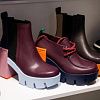 What factors influence pricing, and how to work with retail prices for shoes
Footwear retail is one of those segments that is highly dependent on seasonality. Pricing in the footwear business, in turn, depends on a multitude of factors, from production costs to the vagaries of weather and regional factors.
SR's expert in product assortment and management, Emina Ponyatova, discusses the key principles of pricing footwear products, as well as the main pressure factors and challenges facing footwear retailers in 2025, and offers recommendations on how to ensure successful and profitable retail.
 New Tamaris Spring-Summer 26 Collection: Comfort and Elegance in Every Model
German footwear and accessories brand Tamaris will present its new Spring-Summer '26 collection at the Euro Shoes exhibition in Moscow, from August 27 to 30.
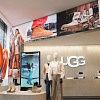 Creating an emotional connection through a showcase
Emotional response from customers is the key to successful retail sales. Shop windows are capable of not only attracting attention, but also evoking emotions: from joy and nostalgia to a sense of belonging and the desire to possess. Using psychological triggers in shop window design helps turn a passerby into a buyer. SR expert in visual merchandising and retail design Viktor Malygin talks about approaches to the concept of shop window design and current themes and plots for presenting goods in shop windows.
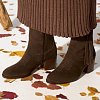 MARCO TOZZI presented his Fall-Winter 2025/26 collection in Moscow.
A harmony of comfort and elegance, fashion trends and classic essentials—German shoe and bag brand MARCO TOZZI presents its new Fall-Winter 2025/26 collection.
 Euro Shoes starts on August 27th!
The leading international exhibition of footwear and accessories in Moscow, Euro Shoes premiere collection, starts next week!
 Euro Shoes: The Fall Premiere That Set Trends and Raised Acute Questions for the Industry
From August 27 to 30, Moscow once again became the shoe capital: the international exhibition Euro Shoes premiere collection was held in the congress center of the Central Trade Fair on Krasnopresnenskaya Embankment. For four days, the exhibition brought together leading global brands, buyers and industry experts, becoming a place where fashion trends are created and business alliances are formed.
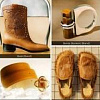 Three fashionable colors for accessories and shoes for the fall-winter 2025/26 season
Each season, trend bureau Future Snoops (formerly Fashion Snoops) identifies key colors for different product groups. For shoes, bags, and accessories, the forecast takes into account the specifics of the categories and is based on general cross-market color forecasts for the season. The three colors described in the article below will influence the accessories market in the fall/winter 25/26 season, helping you promote trendy new items and update classic styles. These shades have beautiful and delicious names: "Ice Star," "Honey Glaze," and "Cherry Jam."
 Euro Shoes — March 4-7, 2026 at the WTC Congress Center
From March 4th to 7th, leading brands from Europe, Asia, and the CIS will gather at the WTC Congress Center in Moscow to present their Fall/Winter 2026 collections, capture current trends, and set the direction for the fashion industry.
 Customer profiling in a shoe store. What is this technique and how can it be used in sales?
Profiling is a scientific method of "reading people," allowing one to create a psychological profile of a person and predict their actions or behavior in certain situations, or even catch them in a lie. Profiling is used in sales because the salesperson needs to understand a person's emotional state and their underlying motivations for purchasing. An expert and practitioner in sales growth in fashion, SR, discusses this method and its practical application in footwear retail.
 Shoe educational program: what shoe soles are made of
“What is the difference between TEP and EVA? What does tunit promise me? Is PVC glue? What is the sole of these shoes made of? ”- the modern buyer wants to know everything. In order not to smash his face in front of him and be able to explain whether such a sole suits him in soles, carefully read this article. In it, process engineer Igor Okorokov tells what materials the soles of shoes are made of and what makes each of them so good.
 How to set prices that will earn
Some businessmen still confuse the concept of margin with the concept of trade margins and set prices for their goods, guided solely by the example of competitors. No wonder they go broke! Analyst at the Academy of Retail Technologies Maxim Gorshkov gives several tips and formulas with which you can set not only ruinous, but also profitable prices.
 Sales of shoes and accessories: effective techniques for business rhetoric
Which speech modules are effective in communicating with potential and current customers of shoe stores, and which are not, Anna Bocharova, a business consultant, knows.
 We form the salary of sellers: expert advice
“How do you charge your consultants for personal or general sales?” Is one of the most popular questions causing a lot of controversy and gossip on the online forums of retail business owners. Indeed, how to properly form the earnings of sellers? But what about bonuses, where to get a sales plan from, do employees allow them to buy goods at discounted stores? In search of truth, the Shoes Report turned to a dozen shoe retailers, but no company wanted to disclose its motivation system - the process of its development was too complicated and individual. Then we asked four business consultants, and finally became convinced that the topic of seller motivation is very complex, because even our experts could not come to a common opinion.
 The whole truth about Bayer. Who is he and how to become one?
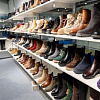
Bayer is no longer a new, but still a popular and sought-after profession. It’s fashionable to be a buyer. Buyers are at the origins of the emergence and development of trends. If the designer offers his vision of fashion in the season, then the buyer selects the most interesting commercial ideas. It is on buyers that the policy of sales of stores and what, in the end, the buyer will wear depends on. This profession is surrounded by a magical fleur, often associated with a lack of understanding of what exactly is the work of a buyer.
 Technology Selling Issues
There is nothing worse than meeting the buyer with the words “Hello, can I help you with something?”, Because the seller works in the store just to help. Criticizing this well-established pattern of communication with the buyer, Andrei Chirkarev, business coach for effective sales and the founder of the New Economy project, shares the technology of truly selling issues with readers of Shoes Report.
 Fur, and not only: types of lining
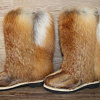
In the production of winter footwear, various materials are used that are designed to retain heat and meet the requirements of consumers: natural sheepleather, artificial fur, artificial fur from natural wool and others. All types of lining fur have their own advantages and disadvantages. Let's consider the properties of each of them.
 The best models of Czech shoes of the past
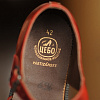
In Soviet times, for shoes from Czechoslovakia sold under the Cebo brand, customers stood in line for four hours and did not regret it, because Czech shoes were considered to be of high quality, comfortable and fashionable. Shoe designer Juraj Shushka shared a photo archive of his collection with Shoes Report magazine, which contains the most interesting Cebo models from the 1940's to the 1980's.
 Retail Arithmetic
Before you begin to solve specific problems, you need to find out how accurately all the leaders of your company understand the basic terminology of retail.
 How to fire a worker without tears, scandal and trial
Sooner or later, any manager is faced with the need to part with an employee. Correctly and on time the dismissal procedure will save the company money, and the boss himself - nerves and time. But why sometimes, knowing that a break in relations is inevitable, we postpone the decision for months?