Collaborations as a growth tool for small footwear brands
Today, fashion brands have few accessible promotional tools left: aside from direct advertising, the costs of which have increased exponentially, the most feasible options are collaborations with influencers and influencer marketing. SR retail management, marketing, and PR expert Ekaterina Zheleznyakova suggests focusing this article on collaborations that are entirely feasible for small local brands and retailers, especially within their hometown or region.
 Ekaterina Zheleznyakova - Partner at the consulting agency K&PAgency, expert in retail management, marketing, and PR. Former director of the Yunichel shoe chain.
These days, we regularly read about renowned brands collaborating with each other, theaters, museums, show business and sports stars, and airlines. However, local brands typically face insurmountable obstacles along the way, the main one being a lack of large budgets. Large national companies, with whom one would be eager to work, to "get hooked" on their media presence and reach, rarely pay attention to local brands; all messages and offers of collaboration fall on deaf ears. And within a region, there's typically not much choice for those willing to take on a project: there simply aren't enough qualified specialists capable of proposing and implementing a creative idea.
What is collaboration?
This is a collaborative project between brands, designers, and media personalities, which creates a unique product, collection, or marketing campaign that unites brands' audiences, values, and resources. As a result, loyal customers are exchanged, and each brand receives additional attention without large-scale advertising investments. Furthermore, collaborations generate news, becoming the topic of publications and active discussions on social media.
I offer several proven approaches for creating collaboration within your city or region.
1. Scale up. If your brick-and-mortar stores are located within a region, don't spread yourself too thin across the country; focus on localization. You don't necessarily need to go global; it's better to create several smaller, but different, campaigns. This will be more effective.
2. Expand your list of potential partners. One of the key mistakes local brands make is focusing too narrowly. For a shoe store, a clothing or bag store would be a perfectly logical partner. We're not ruling this option out, but I also suggest considering:
- coffee shops and bakeries;
- wine boutiques;
- restaurants and cafes;
- flower shops;
- beauty salons;
- spa centers, gyms and yoga studios;
- stores selling household goods, home textiles, and gifts;
- medical centers;
- art studios and creative workshops;
- city festivals, competitions, fairs, markets;
- theaters, cultural events, chamber music concerts;
- charity projects;
- popular local Telegram channels and information resources in the city;
- zoo or pet store;
- city media personality (athlete, TV presenter, entrepreneur, active public figure, animal rights activist, event organizer, musician, actor, photographer, local historian, blogger, stylist).
At the intersection of different segments, collaboration can be unexpected and interesting.
For example, a medical center could partner with a project about proper shoe selection and foot health. A restaurant could launch a "heel-glass" promotion: every woman who enters the restaurant wearing high heels (say, over 10 cm) receives a complimentary glass of wine (from your store). And if she's carried into the restaurant, the person who carried her also gets a glass of wine. Can you imagine the content and loyal audience this would generate?

There are plenty of unique ideas that can be created to combine the two brands, but the key is for the shoe store partner to be proactive and willing to experiment.
How to Find Partners: The Handshake Principle
So, you've identified a company you'd like to collaborate with, found contacts, and submitted your proposal. The best-case scenario is that the marketer says, "Thank you, we'll consider it," or you don't hear back at all. This is the most common scenario. Try working in reverse: in a regional market, the handshake principle is much more effective. Start with those you know personally, those you can call yourself, those you can easily introduce to, and those whose managers are open on social media, writing and responding directly. At the owner-to-owner or friend-to-friend level, it's always easier to reach an agreement. Entrepreneurs have the same goals: attracting new customers and increasing sales without increasing their advertising budget. That's why local partnerships often begin not with cold emails, but with personal connections.

What is fundamentally important when choosing a partner?
We've expanded the selection of potential partners for our joint project, but of course, not just any company will be suitable. Here's what's crucial to consider when choosing a partner:
1. Alignment of values and audience relevance, especially for family-oriented brands. If you operate in the mid-up or premium segment, then collaborating with any mass-market brand will not only fail to convert into sales but will also diminish your value. Conversely, if you operate in the mid-up or premium segment, collaborating with a car dealership is unlikely to benefit either.
2. It is necessary to take into account the gender component.
If 70% of a store's inventory is women's clothing, there's no point in partnering with a hardware store. However, running a special promotion for February 23rd and playing on the theme of strong family relationships, reliability, and masculine character is certainly possible.
3. Evaluate your partner's resources; the collaboration should be beneficial to both brands. Typically, the number of stores is used as a benchmark: we have five, you have one. This approach is too superficial, not least because the incoming traffic to that one store may be comparable to that of five.
4. Be sure to analyze the size and quality of your social media audience. They will be needed to present the collaboration (followers, reach, engagement rate (ER - Engagement Rate) - the higher the ER, the more interesting the content) and will become the only asset through which you will bring the idea to the masses.
5. The partner's audience is their most valuable asset and, in fact, the very reason for the collaboration. Request information about their customer database (gender, age, income, total number of contacts and how many of them are active, average order value, purchase frequency, lifestyle). It's important to understand from the start who you're dealing with. Do you need this audience? Can they ever become yours? Declining collaboration at the outset is better than realizing later that your resources were wasted. A partner's database is a key asset and a source of fresh blood for your brand.
6. The partner's media presence: they may be smaller than you, but better known and more visible. In this case, you'll also reap the benefits.
7. Experience in hosting events and a partner's established community. For example, a wellness studio regularly hosts weekly master classes of 10-15 people on health, balance, and recovery. If you contribute to the event program and talk about foot health and how to maintain it, or how to relax after a day spent in heels, you'll gain direct contact with a warm audience, which, incidentally, you can immediately invite to your next event at your store.
8. Reputational capital. Absence of scandals, a calm, even media profile, and a publicly approved image.
Collaboration mechanics are built on the partner's strong resources. If they have a large client base, it's essential to develop a contact capture mechanism: how to capture the data of every client who clicks on the partner's link to you. For example, to receive a gift from you, the client must register on your website, answer a few questions (which will allow you to make more personalized offers), and only then receive the gift. As a reminder, compliance with personal data laws remains a requirement in collaborations, so keep this in mind.

If a partner is well-established and promoted on social media, then we'll prioritize this communication channel: good, high-quality content will be required, designed not for a one-time post, but for a longer-term story—client interactions, behind-the-scenes content, influencers, and so on.
A coffee shop, if you choose it as a partner, may have huge daily offline traffic but no social media presence or contact database at all. In this case, the creative concept should focus on the store itself. Who wouldn't want to take part in a "coffee in bed" promotion, using a cup with your logo and a QR code leading to a page with the promotion's terms and conditions or a prize draw? Calculate how many takeaway coffees the coffee shop sells daily. Or perhaps a special dessert, codenamed "Shoe," will be added to the menu, delivered along with a cute invitation to a show of your new collection or some other customer promotion at your store?
In any case, it's important to remember the main goal of collaboration: to make the partner's target audience your own. Not to gift or surprise (although that's true too), but to win them over. Tools for achieving this goal:
- To receive a gift, register on the website;
- To take part in the competition/get a discount, scan the QR code;
- Leave your email and receive a promo code.
It makes sense to immediately consider how you'll engage with your new audience after the project ends, when the newcomers' contacts become yours. Special offers, previews, and client events are all effective ways to retain new clients.
Why do you need a creative idea?
Collaboration isn't about exchanging flyers or placing advertising posters in each other's stores. Collaboration involves creating a joint product. And by "product," in this case, we define it broadly. It could be:
- A limited collection created in collaboration with an artist or stylist.
- Testing the durability of footwear with the participation of an athlete.
- Special dessert at the coffee shop.
- A themed event or series of events.
- Advertising campaign.
- A social media photo project featuring customers or media personalities.
An interesting idea that evokes emotion should be the foundation of a collaboration project, and interest and loyalty become the project's driving forces.
Any collaboration is always enhanced by "virality" (viral content—videos, photos, texts, and memes that are distributed exponentially for free by internet users themselves, thanks to their emotionality, originality, or high usefulness. Reposts provide brands with huge free reach.) When a client has a unique, engaging experience that they want to share, they'll want to talk about it. If the promotion is truly engaging, people will want to talk about it; if the dessert is cute, beautiful, and delicious, they'll definitely want to photograph it and post it on social media; if the client's photos are high-quality, they'll share them with their loved ones; if the masterclass is useful and informative, they'll bring their friends; if the project is unusual or social, it'll be featured on local Telegram channels.

And here it is important to separate tasks: sales and “virality” are not the same thing.
Your collaborative dessert might not be a hit at the coffee shop, but it's sure to make it onto the feeds of young female influencers. A limited-edition collaboration with a local artist is unlikely to be a top seller. Its purpose is different: to create awareness and attract attention to the brand. Therefore, collaborations are rarely released in large quantities. But if it generates interest and discussion, it has already fulfilled its primary marketing function—increasing brand recognition and memorability.
It's important not to lose sight of the main goal of the collaboration while pursuing an interesting and creative idea. Once you've come up with the idea and defined the mechanics, stop and review each step of the project from the perspective of "How is this leading us to our goal?"
Collaborations with media personalities
Traditionally, fashion brands collaborate with stylists, artists, and fashion bloggers. The result of this collaboration is a limited collection or a signature print. We've seen successful projects where a stylist and a local brand have joined forces to create joint designs. The stylist, who had always chosen clothes from the marketplace, finally realized their dream of creating their own product, and the brand received a boost from the stylist's highly-honed and loyal audience. This is the ideal. But in the region, finding such a convergence of interests isn't easy.
For this in PR there is a concept of "legend" creating the right media environment and storytelling around the product being created.
For example, a stylist, athlete, or TV personality might not directly create a collection, but rather participate in its development, selecting styles and materials. They might suggest a print, color, or simply a name dedicated to their hometown. Even if the collection development process takes place within your regular work environment, the media personality is only required to create the ambiance, demonstrate ownership, participation, and a compelling story of interaction that will connect the brand, personality, and product to the audience.
Essentially, some of the already developed and commissioned models can receive the status of a "limited collaborative collection" only through separate packaging and presentation in the store, with the wishes of the invited co-author.
Such a story creates emotional value for the product and increases interest in the brand through interest in the person, activating the army of fans of the media personality, turning them into fans of the brand.
This type of mechanics doesn't require the "invited guest" to delve into the technological process and development; all they need is a solid following and high-quality, regular storytelling, broken down into multiple episodes and spread out over time: "We met," "We studied samples," "We selected materials," "We were inspired by something," "We developed models," "We tested the quality," "We received the finished product," "We held a joint presentation," "The collection I co-developed can be viewed at the link."
When choosing a media partner for collaboration, consider not only the number of followers but also the quality of their content, their ability to present it, tell it, and share it on camera. There's one caveat to this: the invited star must love both the brand and the product. It's unlikely anyone will sign their good name and sincerely talk about something they don't wear and love themselves.
Showrooming: pros and cons. How to deal with a new consumer trend
In the focus of events, or What remains behind the scenes of advertising photography?
Two directions of naming shoe brands
Increase sales? Guaranteed!
How to "reach out" to the buyer of the XXI century
 Shoes Style and its Discoveries. An Interview with Anton Bazylev, Prize Winner of the International Shoe Design Competition
The international shoe design competition Shoes Style, held in Moscow this year, showcased many interesting footwear and accessory collections. Shoes Report recently published a story about the winners—third-year students from Kosygin Russian State University, Margarita Skvaznikova and Egor Lysov, who presented their "Retrospective" shoe collection at Shoes Style.
 ICEBUG at Euro Shoes: Swedish Innovation in Grip Technology
ICEBUG is a Swedish company steeped in innovation and creativity. Our rapid growth is a result of our expertise in grip and technology. Since its inception, ICEBUG has been creating footwear with superior grip and is always striving to improve grip even further.
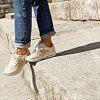 KV+ will present versatile sneakers for both sports and urban wear at Euro Shoes.
The Swiss brand KV+ is not so well known to the general Russian audience, but it is well known in the world of skiing, because it was there that KV+ took its first steps and actively developed. The Swiss brand has earned the trust of the professional sports audience over the past 35 years. At the same time, the Russian sports market of ski equipment has always been a priority for the Swiss.
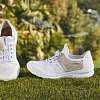 Rieker and Remonte are regular exhibitors at Euro Shoes: meet your favorite brands at the exhibition from August 25 to 28 at the Central Trade Fair Center.
Riker and Remonte will present their Spring/Summer 2027 collections at the Euro Shoes exhibition (August 25–28, WTC Congress Centre).
 New brands at Euro Shoes in August!
At the end of the month, from August 25th to 28th, the international footwear and accessories exhibition Euro Shoes Premiere Collection will take place in Moscow at the WTC Congress Center on Krasnopresnenskaya Embankment. We'd like to introduce you to the new exhibitors at Euro Shoes, who will be presenting their collections of footwear, accessories, shoe care products, and leather goods.
 From July 27 to 29, the Euro Shoes@CAF_Eliteline 2026 exhibition will be held in Almaty, Kazakhstan.
Elite Line is an international specialized exhibition of footwear, fur, leather, and accessories. The exhibition will feature collections from international and domestic manufacturers from Russia, Turkey, Germany, Italy, Kazakhstan, and other countries.
 How to learn to effectively manage store customer traffic?
Customer traffic in shopping malls and street retail is declining; people are shopping less offline for a number of objective reasons, one of which is the convenience of online shopping with all its advantages. And yet, offline shopping continues to thrive. How can we control store traffic, learn to correctly calculate and influence the number of people visiting stores to ensure profitability?
 "When Customers Are Few: How Fashion Store Owners Can Squeeze the Most Out of Every Customer"
In recent years, offline retail in clothing, footwear, and accessories has been operating under conditions of a steady decline in incoming traffic. By the end of 2025, offline store traffic in Russia had declined by 8-15%, with the offline segment's purchase rate declining more sharply than the overall market, according to Retail.ru. According to statistics from individual shopping centers, the decline by the end of last year was between 15 and 25%. How can salespeople effectively engage with customers in such challenging conditions? We'll explore service strategies in low traffic conditions with SR expert Elena Vinogradova, who specializes in purchasing and sales in the fashion business. The expert shares proven methods with practical examples of speech modules. Elena is confident that, in a context of declining traffic, high-quality service is becoming the main competitive advantage for the shoe industry.
 How the Masters Forge. Interviews with the Winners of the International Shoe Design Competition, Shoes Style
In May 2026, the finalists of the international footwear design competition, Shoes Style, were awarded again in Moscow. The annual competition is held by A.N. Kosygin Russian State University, a university that trains shoe designers and technologists, and attracts students from design universities in Russia and the CIS.
 How to sell more without losing customer trust?
Today, discounts and sales are no longer considered an effective tool for achieving sales targets. Furthermore, online and offline stores offer consumers virtually the same price for shoes, and consumers often choose not the cheapest option, but the easiest and fastest one. This is why service and soft sales are becoming a key competitive advantage for shoe stores, says Maria Gerasimenko, an expert at SR in fashion business management and development.
 Euro Shoes: the industry's leading footwear exhibition will be held August 25–28 at the WTC Congress Center.
At the end of August, Moscow will once again become a magnet for the footwear industry: the WTC Congress Center on Krasnopresnenskaya Embankment will host the international exhibition Euro Shoes Premiere Collection—a specialized B2B event for footwear industry and fashion retail professionals, the key industry event of the new purchasing season and the development of fashion retail assortments. Over 100 companies and brands will participate in the exhibition, presenting their spring/summer 2027 collections of shoes, bags, and accessories to professional visitors. A working meeting of the National Footwear Union of Russia (NOBS) will be held as part of Euro Shoes, featuring footwear companies, professional associations, marketplaces, and independent experts.
 The share of marketplaces will grow
The footwear category on Ozon Fashion shows steady growth
The share of online sales in fashion is growing, and last year it was already more than 54%. Buyers are increasingly buying clothes and shoes online, and the lion's share of these purchases are made on marketplaces. Ozon is one of the leading players in the Russian fashion market, and the Fashion direction on the platform is the fastest growing. About trends in online trading, about the specifics of the shoe market and recommendations for brands planning to sell shoes through the marketplace - in an exclusive interview with SR with the Commercial Director of the Footwear direction at Ozon Fashion Olga Moskvicheva.
 What factors influence pricing, and how to work with retail prices for shoes
Footwear retail is one of those segments that is highly dependent on seasonality. Pricing in the footwear business, in turn, depends on a multitude of factors, from production costs to the vagaries of weather and regional factors.
SR's expert in product assortment and management, Emina Ponyatova, discusses the key principles of pricing footwear products, as well as the main pressure factors and challenges facing footwear retailers in 2025, and offers recommendations on how to ensure successful and profitable retail.
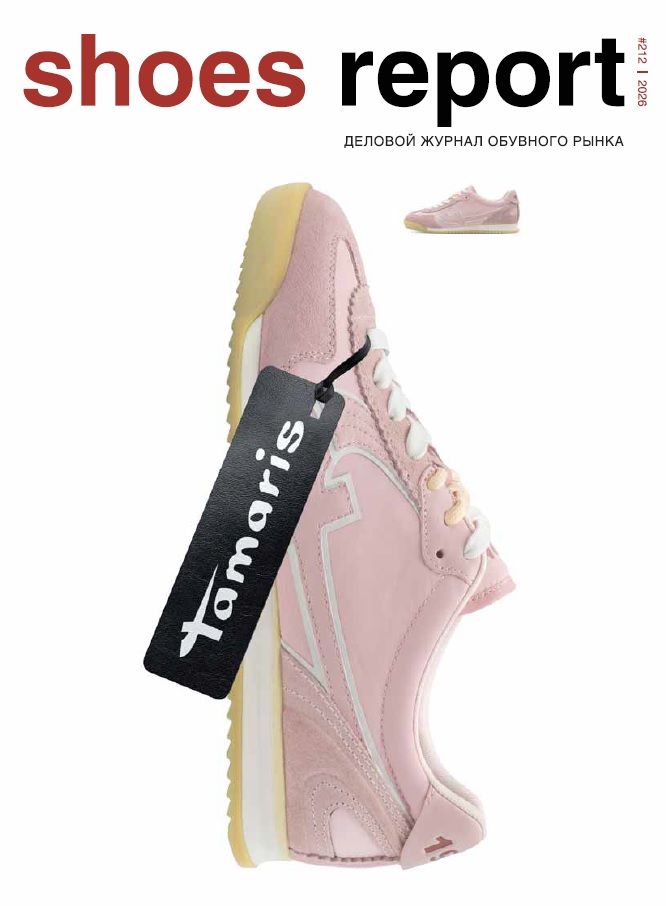
 New Tamaris Spring-Summer 26 Collection: Comfort and Elegance in Every Model
German footwear and accessories brand Tamaris will present its new Spring-Summer '26 collection at the Euro Shoes exhibition in Moscow, from August 27 to 30.
 Creating an emotional connection through a showcase
Emotional response from customers is the key to successful retail sales. Shop windows are capable of not only attracting attention, but also evoking emotions: from joy and nostalgia to a sense of belonging and the desire to possess. Using psychological triggers in shop window design helps turn a passerby into a buyer. SR expert in visual merchandising and retail design Viktor Malygin talks about approaches to the concept of shop window design and current themes and plots for presenting goods in shop windows.
 MARCO TOZZI presented his Fall-Winter 2025/26 collection in Moscow.
A harmony of comfort and elegance, fashion trends and classic essentials—German shoe and bag brand MARCO TOZZI presents its new Fall-Winter 2025/26 collection.
 Euro Shoes starts on August 27th!
The leading international exhibition of footwear and accessories in Moscow, Euro Shoes premiere collection, starts next week!
 Euro Shoes: The Fall Premiere That Set Trends and Raised Acute Questions for the Industry
From August 27 to 30, Moscow once again became the shoe capital: the international exhibition Euro Shoes premiere collection was held in the congress center of the Central Trade Fair on Krasnopresnenskaya Embankment. For four days, the exhibition brought together leading global brands, buyers and industry experts, becoming a place where fashion trends are created and business alliances are formed.
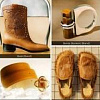 Three fashionable colors for accessories and shoes for the fall-winter 2025/26 season
Each season, trend bureau Future Snoops (formerly Fashion Snoops) identifies key colors for different product groups. For shoes, bags, and accessories, the forecast takes into account the specifics of the categories and is based on general cross-market color forecasts for the season. The three colors described in the article below will influence the accessories market in the fall/winter 25/26 season, helping you promote trendy new items and update classic styles. These shades have beautiful and delicious names: "Ice Star," "Honey Glaze," and "Cherry Jam."
 Euro Shoes — March 4-7, 2026 at the WTC Congress Center
From March 4th to 7th, leading brands from Europe, Asia, and the CIS will gather at the WTC Congress Center in Moscow to present their Fall/Winter 2026 collections, capture current trends, and set the direction for the fashion industry.
 Customer profiling in a shoe store. What is this technique and how can it be used in sales?
Profiling is a scientific method of "reading people," allowing one to create a psychological profile of a person and predict their actions or behavior in certain situations, or even catch them in a lie. Profiling is used in sales because the salesperson needs to understand a person's emotional state and their underlying motivations for purchasing. An expert and practitioner in sales growth in fashion, SR, discusses this method and its practical application in footwear retail.
 Shoe educational program: what shoe soles are made of
“What is the difference between TEP and EVA? What does tunit promise me? Is PVC glue? What is the sole of these shoes made of? ”- the modern buyer wants to know everything. In order not to smash his face in front of him and be able to explain whether such a sole suits him in soles, carefully read this article. In it, process engineer Igor Okorokov tells what materials the soles of shoes are made of and what makes each of them so good.
 How to set prices that will earn
Some businessmen still confuse the concept of margin with the concept of trade margins and set prices for their goods, guided solely by the example of competitors. No wonder they go broke! Analyst at the Academy of Retail Technologies Maxim Gorshkov gives several tips and formulas with which you can set not only ruinous, but also profitable prices.
 Sales of shoes and accessories: effective techniques for business rhetoric
Which speech modules are effective in communicating with potential and current customers of shoe stores, and which are not, Anna Bocharova, a business consultant, knows.
 We form the salary of sellers: expert advice
“How do you charge your consultants for personal or general sales?” Is one of the most popular questions causing a lot of controversy and gossip on the online forums of retail business owners. Indeed, how to properly form the earnings of sellers? But what about bonuses, where to get a sales plan from, do employees allow them to buy goods at discounted stores? In search of truth, the Shoes Report turned to a dozen shoe retailers, but no company wanted to disclose its motivation system - the process of its development was too complicated and individual. Then we asked four business consultants, and finally became convinced that the topic of seller motivation is very complex, because even our experts could not come to a common opinion.
 The whole truth about Bayer. Who is he and how to become one?
Bayer is no longer a new, but still a popular and sought-after profession. It’s fashionable to be a buyer. Buyers are at the origins of the emergence and development of trends. If the designer offers his vision of fashion in the season, then the buyer selects the most interesting commercial ideas. It is on buyers that the policy of sales of stores and what, in the end, the buyer will wear depends on. This profession is surrounded by a magical fleur, often associated with a lack of understanding of what exactly is the work of a buyer.
 Technology Selling Issues
There is nothing worse than meeting the buyer with the words “Hello, can I help you with something?”, Because the seller works in the store just to help. Criticizing this well-established pattern of communication with the buyer, Andrei Chirkarev, business coach for effective sales and the founder of the New Economy project, shares the technology of truly selling issues with readers of Shoes Report.
 Fur, and not only: types of lining
In the production of winter footwear, various materials are used that are designed to retain heat and meet the requirements of consumers: natural sheepleather, artificial fur, artificial fur from natural wool and others. All types of lining fur have their own advantages and disadvantages. Let's consider the properties of each of them.
 The best models of Czech shoes of the past
In Soviet times, for shoes from Czechoslovakia sold under the Cebo brand, customers stood in line for four hours and did not regret it, because Czech shoes were considered to be of high quality, comfortable and fashionable. Shoe designer Juraj Shushka shared a photo archive of his collection with Shoes Report magazine, which contains the most interesting Cebo models from the 1940's to the 1980's.
 Retail Arithmetic
Before you begin to solve specific problems, you need to find out how accurately all the leaders of your company understand the basic terminology of retail.
 How to fire a worker without tears, scandal and trial
Sooner or later, any manager is faced with the need to part with an employee. Correctly and on time the dismissal procedure will save the company money, and the boss himself - nerves and time. But why sometimes, knowing that a break in relations is inevitable, we postpone the decision for months?